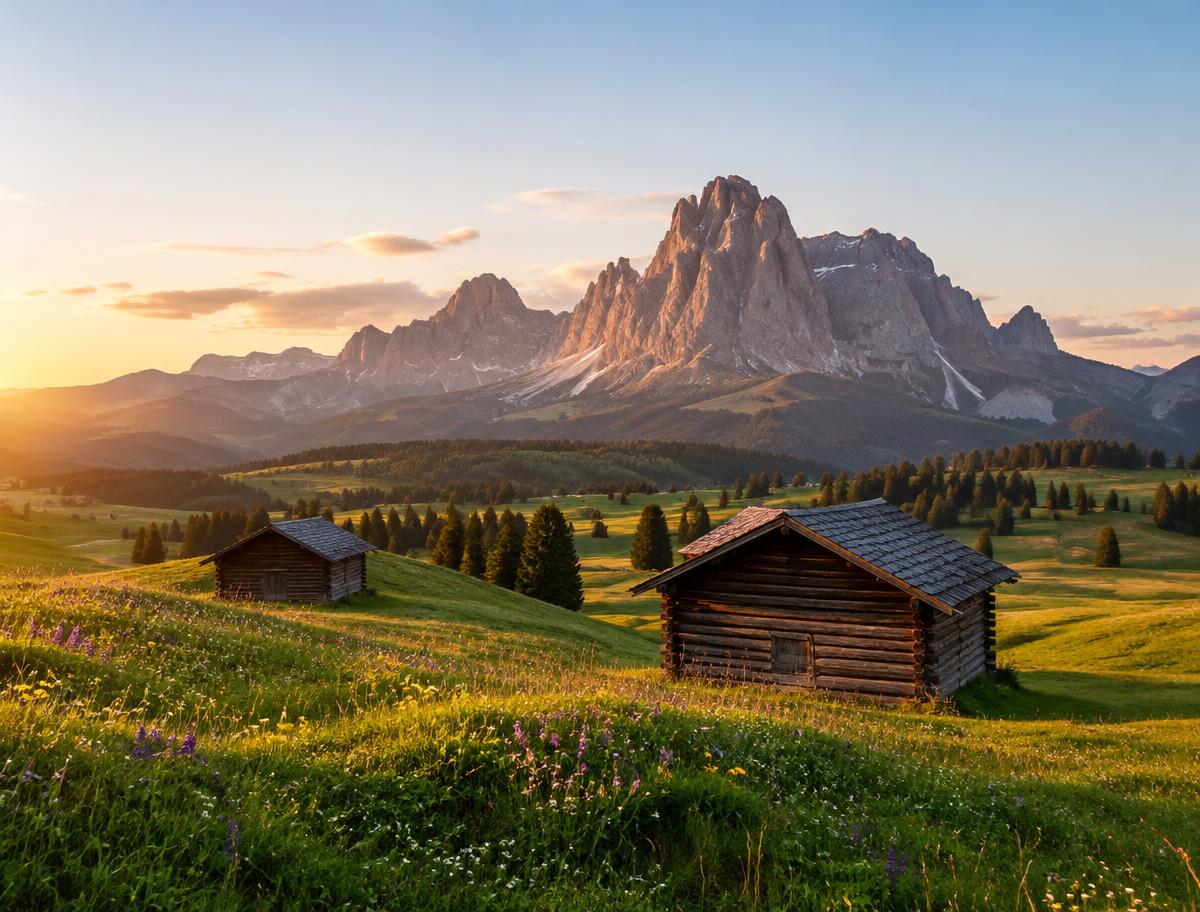
Choose the best season for Dolomites hiking, skiing or South Tyrol villages, with practical advice for May, June and autumn lift closures.
By The Dolomites Club · South Tyrol locals with hospitality experience
For a hiking-focused Dolomites trip, start by considering late June through September, then confirm the opening dates and conditions of your actual routes. For skiing, choose the winter operating season of your resort. For food, villages and lower-valley walks, South Tyrol offers options beyond the high-mountain summer season.
The Dolomites are not a single resort with one opening day. Elevation, snow, lift schedules and the valley you choose all matter. A cable car operating in May does not mean every high trail or overnight hut is ready for summer hiking.
Summer (late June – early September)
Summer is the conventional choice for a trip built around high-level hiking and mountain huts, but check each lift and hut rather than assuming everything opens together. Reserve overnight huts and accommodation before committing to a route that depends on them.
Build your itinerary around a few priorities, not a race between every famous viewpoint. Include a lower-altitude or village alternative for each mountain day. For exposed routes and via ferrata, get advice from a certified mountain guide appropriate to your experience and the current conditions.
Fall (mid-September – October)
September and October can suit scenery, walking and South Tyrol food traditions such as Törggelen. Autumn is also a changing operating season: some lifts close in September or early October, while others run later. Check the lift needed for your chosen outing, not just a general destination calendar.
Do not plan a one-way hike around a lift or hut without confirming that it operates on your date. A valley-based stay with flexible day trips is often a more practical autumn plan than a fixed hut-to-hut route. Seasonal colors and weather are natural conditions, not a guaranteed attraction on a specific day.
Winter (December – April)
Choose a ski base according to your group's level, lessons and access to the slopes you want to ski. Resort opening dates and daily lift status determine what is available; a calendar month alone does not guarantee a particular ski circuit is open.
For a Christmas-market trip, check each town's official dates and hours before booking. Market season and ski season are not interchangeable: a winter trip later in the season may offer skiing without Christmas markets. Non-skiers can mix village visits, food and wellness with winter activities matched to conditions.
Spring (May – mid-June)
May and early June need a more specific plan than 'summer in the Dolomites.' Some lifts operate while others are still closed, and high routes can retain snow. Val Gardena's official schedule lists each installation separately, so use it to identify what is actually available for your dates.
If your dates are fixed, build the trip around accessible lower walks, villages, food and the lifts confirmed open. If your main goal is a continuous high-mountain hut trek, establish the hut and trail conditions before choosing flights. Never assume a snow-covered trail is safe because a cable car nearby is operating.
How many days should you allow?
As a starting point, use three mountain days for one valley and a small number of outings; use a week if you want more flexibility, rest time and a mix of hiking and culture. These are planning suggestions, not minimum requirements. Arrival, departure and transfers reduce the time available outdoors.
For a first US trip, choose your season and main activity before picking airports or adding several hotel bases. Share your dates, fitness level and must-see places with The Dolomites Club for a free personal plan. The planning service is free; accommodation, transport, activities and other trip costs are separate.
Official sources & current schedules
Opening dates, transport services and booking terms can change. Check the provider's latest information for your travel dates.